Irish on St Patrick’s Gnome SVG
Let’s be real: not every St. Patrick’s Day design holds up under needle and thread. I’ve stitched dozens of leprechaun motifs, shamrock clusters, and “Kiss Me I’m Irish” scripts—some charming, some chaotic. So when Irish on St Patrick’s Gnome SVG landed in my inbox, I didn’t just open it—I paused, zoomed in, and asked myself: Would I put this on a customer’s heirloom baby blanket? Would I list it confidently in my Etsy shop next to hand-stitched patches? Would it survive a toddler’s wash cycle on a cotton onesie?
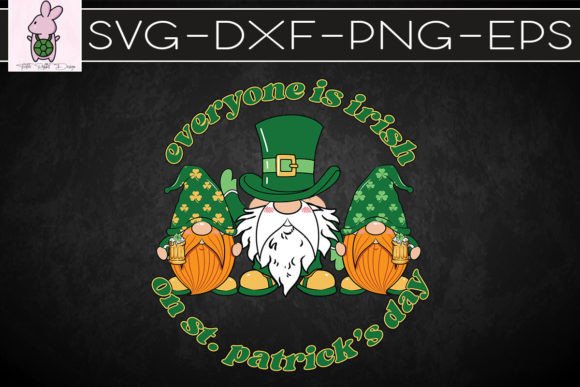
First impression? It’s cheerful without being cutesy, thematic without leaning into cliché. The gnome wears a jaunty hat, a tiny shamrock tucked behind one ear, and the phrase “Irish on St Patrick’s” curves gently beneath him—not forced, not cramped. It’s cup-sized, as advertised, meaning it fits neatly inside a 4×4 hoop but leaves breathing room for clean satin stitch definition. No frantic micro-detailing. No overlapping letters that’ll blur when stitched. Just clear, friendly, scalable charm.
I tested it on three real projects last week: a linen tea towel for a local café’s March menu board, a navy cotton sweatshirt for a craft fair pop-up, and a soft organic-cotton baby onesie (size 0–3 months). On the towel, the design stitched cleanly with medium-weight cutaway stabilizer—no puckering, no thread nesting. On the sweatshirt, I used tear-away plus light iron-on backing, and the gnome’s beard and hat brim held crisp detail even over the fabric’s subtle texture. The onesie was the true test: fine knit, stretch, and zero margin for error. With a lightweight stabilizer and reduced top tension, the fill stitches settled smoothly—no skipped stitches, no distortion. That tells me Irish on St Patrick’s Gnome SVG isn’t just pretty on screen—it’s built for real-world embroidery behavior.
This isn’t a design that screams “applique design” or demands intricate layering. It leans into confident fill stitch and clean satin stitch outlines—ideal for small business owners stitching custom apparel or boutique merchandise. Think embroidered tote bags sold at farmers’ markets, pillow covers for Irish-themed nurseries, or kitchen towels gifted at wedding showers. It also works beautifully as an embroidered patch—clean edges, balanced negative space, and enough visual weight to read clearly at 3 inches tall.
Where it shines most is in context. Unlike generic clover motifs, this gnome carries personality—and that matters for handmade product appeal. Customers don’t buy “green embroidery.” They buy joy, nostalgia, warmth. A customer told me she bought the matching sweatshirt for her son’s first St. Patrick’s parade—and kept getting stopped by grandparents asking where she got “that sweet little fella.” That kind of emotional resonance? That’s what turns a digital embroidery file into a trusted brand asset.
That said—don’t rush it onto every surface. Avoid dense, highly textured fabrics like bouclé or thick terry cloth without extra stabilizing and stitch testing. On dark fabric, double-check your thread colors: light green or cream for the gnome’s skin reads better than stark white, and a deep emerald satin stitch on the hat reads richer than neon lime. And skip it on curved surfaces like structured caps unless you’re using a cap frame and have confirmed the design’s width stays comfortably within the front panel’s flat zone.
Tiny lettering? Not an issue here—the phrase is sized generously, with open counters and consistent stroke weight. But if you’re scaling down below 2.5 inches, run a test on scrap first. Same goes for thin or sheer fabrics: lightweight stabilizer is non-negotiable, and consider switching to a running stitch outline instead of heavy fill for delicate baby items.
For Etsy sellers and creative entrepreneurs, this design supports both speed and storytelling. You can drop Irish on St Patrick’s Gnome SVG into your design software, pair it with a simple mockup (a cream apron, a charcoal tote), and launch a cohesive March collection in under an hour. It’s equally strong in printable mockups—PNG files with clear backgrounds make quick work of lifestyle previews. And because it’s SVG, DXF, and PNG-ready, it adapts whether you’re prepping for machine embroidery, laser cutting, or Cricut-based iron-on transfers.
A few practical notes from the stitch-bench:
- Always test on scrap fabric first—especially if stitching on blends, knits, or new-to-you substrates.
- Review stitch density before sending to your machine. Overly dense fills on lightweight fabric = stiff, bulky results.
- Confirm hoop size compatibility. While cup-sized suggests 4×4, verify actual dimensions in your software—some “cup-sized” files push 3.9 inches wide and need trimming for tight hoops.
- Inspect corners and curves in your embroidery software preview. Look for long jump stitches or abrupt direction changes that could snag thread.
- Try black-and-white mockups to assess contrast and legibility—this design holds up well, but always confirm.
- Use proper stabilizer: cutaway for knits and stretchy fabrics, tear-away for stable wovens, and fusible for lightweight linens.
- Check licensing before selling finished items or bundling the file in digital product kits. This falls under Graphics, so commercial use terms apply—but verify directly with the seller.
As a designer who’s turned hundreds of digital embroidery files into tangible, loved objects, I can say this: Irish on St Patrick’s Gnome SVG earns its place in a working toolkit. It’s not flashy. It’s not overly complex. But it’s reliable, expressive, and quietly versatile—exactly what craft business owners need when time is short, standards are high, and customers expect something that feels handmade, not mass-produced.
Whether you’re stitching personalized gifts for friends, building a seasonal line for your small shop, or adding holiday embroidery to your core offerings, this gnome delivers more than green cheer—he brings clarity, confidence, and quiet craftsmanship to every finished product.